A small mistake in a URL can create a big problem. One wrong character, missing symbol, extra space, or encoded value can make a link look confusing or stop it from opening properly. This is where url decoder spellmistake becomes useful for website owners, bloggers, students, developers, and everyday internet users who want to understand what is happening inside a messy link.
A URL decoder helps turn encoded characters into readable text. It does not work like a spelling correction tool, but it can make hidden or confusing parts of a link easier to check. When a link contains symbols such as %20, %3D, %2F, or %26, a decoder can reveal what those parts mean. After that, a person can check whether the actual URL contains a spelling mistake, wrong word, broken path, or incorrect parameter.
What Is url decoder spellmistake?
The term url decoder spellmistake usually refers to confusion between URL decoding and spelling correction. Many people search for this phrase when they see a strange link and think the problem may be a spelling mistake. In reality, some URL problems come from encoded characters, while others come from human typing errors.
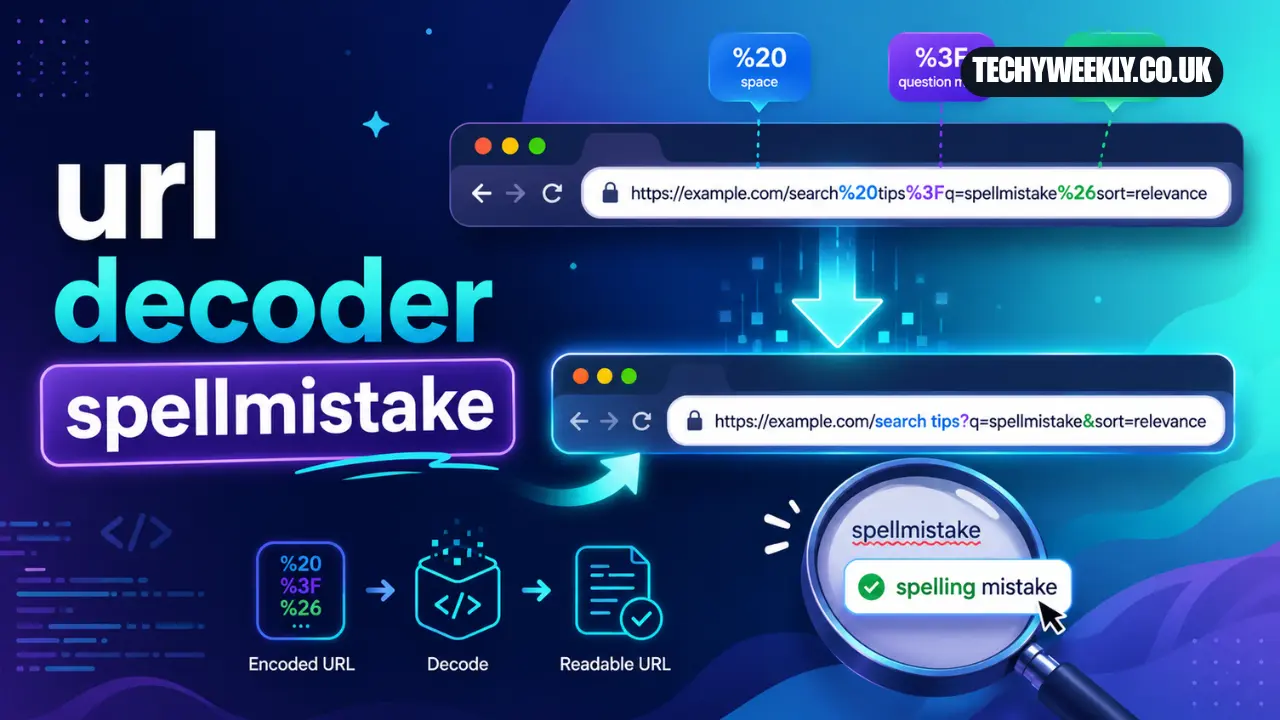
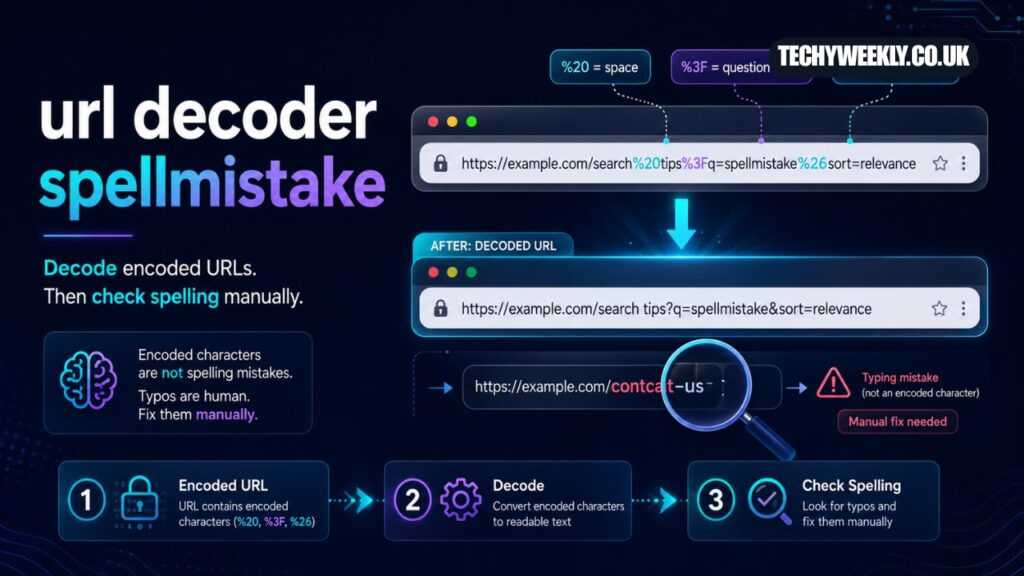
For example, a URL may contain %20 instead of a space or %3F instead of a question mark. These are not spelling mistakes. They are encoded characters used to make URLs safe for browsers and web systems. On the other hand, if a website address has a wrong word, missing letter, or incorrect page slug, that is a spelling mistake and must be fixed manually.
Understanding url decoder spellmistake helps users avoid confusion. A decoder can make the URL readable, but it cannot always repair the link. It shows the real structure of the URL so the user can check whether the problem is caused by encoding, spelling, formatting, or a broken page address.
Why URLs Become Hard to Read
URLs often become difficult to read because browsers, websites, and online tools convert special characters into encoded values. This usually happens when a link contains spaces, symbols, punctuation marks, query strings, tracking codes, or non-English characters. The encoded form may look strange, but it helps the link move safely across browsers, servers, and applications.
For example, a normal-looking phrase like “best tools” may appear as best%20tools inside a URL. The %20 represents a space. A question mark may appear as %3F, and an ampersand may appear as %26. These changes are normal in web addresses, especially in search URLs, form links, tracking links, and shared links copied from apps.
The problem begins when users do not know whether the URL is encoded correctly or broken. A long link full of symbols can look suspicious or badly written. By using a decoder, a person can convert the encoded parts back into readable text and then check the URL more clearly. This makes url decoder spellmistake a helpful topic for anyone who works with website links.
How a URL Decoder Works
A URL decoder reads encoded characters and converts them back into their normal form. Most encoded characters start with a percent sign followed by two letters or numbers. This is called percent encoding. It is widely used because URLs cannot always contain every character in plain form.
When a decoder sees %20, it changes it into a space. When it sees %3D, it changes it into an equal sign. When it sees %26, it changes it into an ampersand. This process helps reveal the true meaning of a link, especially when the URL contains query parameters or tracking details.
For example, a link may look like this:
example.com/search?q=url%20decoder%20tool
After decoding, it becomes easier to read:
example.com/search?q=url decoder tool
This simple change helps users understand what the URL is trying to show. In the case of url decoder spellmistake, decoding can help reveal whether the link contains an actual spelling error or only encoded characters.
URL Decoder Is Not a Spell Checker
A very important point is that a URL decoder is not a spell checker. It does not know whether a word is spelled correctly. It only changes encoded values into readable characters. If the decoded URL still contains a wrong word, the user must fix that word by hand.
For example, if a link says “contcat-us” instead of “contact-us,” a decoder will not automatically correct it. The tool may show the word clearly, but it will not know that the page should be “contact-us.” That type of mistake is related to website structure, page naming, or manual typing.
This is why url decoder spellmistake should be understood as a checking process, not a one-click repair. First, decode the URL. Then, read the result carefully. After that, correct any real spelling mistakes, missing letters, wrong slugs, or broken parameters.
Common URL Mistakes Users Should Check
One common mistake is adding a space inside a URL. Spaces are not safe in plain URLs, so they usually become %20. Sometimes the link may still work after encoding, but in other cases, the space can break the address if it is placed in the wrong area.
Another common mistake is using the wrong symbol. Query strings often use question marks, equal signs, and ampersands. If one of these symbols is missing or encoded incorrectly, the link may not send the right information to the website. This can affect search pages, login redirects, product filters, and tracking links.
Spelling mistakes in page slugs are also common. A slug is the readable part of a URL that often describes a page, such as “about-us,” “contact,” or “best-url-tools.” If one letter is wrong, the server may show a 404 error or send users to the wrong page. url decoder spellmistake is useful because it encourages users to decode first and then check the visible words carefully.
Examples of Encoded URL Characters
Encoded URLs may look confusing at first, but many symbols are easy to understand once decoded. The space character is commonly shown as %20. A slash can appear as %2F. A colon may appear as %3A. A question mark can appear as %3F. An equal sign may appear as %3D. An ampersand can appear as %26.
These characters are often found in long URLs copied from browsers, email campaigns, search pages, social media posts, and analytics tools. When decoded, the link becomes easier to read, and the user can check whether the page name, search phrase, or tracking value makes sense.
For example, a product search URL may include several filters. Without decoding, it may look like a random mix of letters, numbers, and percent signs. After decoding, the user may see product names, categories, prices, page numbers, and sorting options. This makes url decoder spellmistake useful for checking hidden URL details.
Why Bloggers and Website Owners Should Care
Bloggers and website owners should care about clean URLs because links affect user experience. A clear URL is easier to read, easier to share, and easier to trust. If a link looks broken or confusing, visitors may avoid clicking it. If a URL contains spelling mistakes, it may also make a website look careless.
Clean links are especially important for blog posts, product pages, service pages, and landing pages. A readable URL gives users a quick idea of what the page is about. For example, a URL ending in “url-decoder-guide” is easier to understand than one ending in random symbols or misspelled words.
A decoded URL can help website owners review page slugs, category names, tracking tags, and internal links. If a mistake is found, it should be corrected before the link is shared widely. For this reason, url decoder spellmistake can be treated as a simple link-checking habit before publishing content.
How to Check a URL Step by Step
Start by copying the full URL carefully. Do not remove symbols, because even small characters can change how the link works. Paste the URL into a trusted decoding tool or use a browser-based decoder if available. Once the URL is decoded, read it slowly from the beginning to the end.
Check the domain name first. A spelling mistake in the domain can lead to the wrong website or an error page. Then check the path after the domain. This part often contains the page name, article slug, category, or product title. If any word looks wrong, compare it with the correct page title or website structure.
After that, check the query string. This part often starts with a question mark and includes values such as search terms, filters, campaign tags, or user actions. If the decoded values look broken, incomplete, or misspelled, the link may need to be corrected before use. This step is the practical use of url decoder spellmistake.
URL Encoding vs URL Decoding
URL encoding and URL decoding are opposite processes. Encoding changes normal characters into a safe URL format. Decoding changes encoded characters back into readable form. Both processes are useful, but they serve different purposes.
Encoding is helpful when creating links that contain spaces, symbols, or special characters. Decoding is helpful when reading or checking a link that already contains encoded values. A person working with website links may need both processes at different times.
The phrase url decoder spellmistake becomes easier to understand when these two actions are separated. Encoding protects a URL from unsafe characters. Decoding reveals the readable version. Spelling correction is a separate step that depends on human review.
Safe Use of URL Decoders
A URL decoder can be helpful, but users should be careful with sensitive links. Some URLs may contain private tokens, login sessions, email addresses, tracking IDs, or account-related details. These should not be pasted into random online tools without caution.
For everyday links, decoding is usually simple and safe. For private or business links, it is better to use a trusted tool, local browser function, or developer environment. This helps protect personal information while still allowing the user to inspect the URL.
Users should also avoid clicking unknown decoded links immediately. Decoding a URL makes it readable, but it does not prove that the link is safe. Always check the domain, page path, and suspicious words before opening a link from an unknown source.
Best Practices to Avoid URL Problems
Use short, clear, and meaningful page slugs whenever possible. Avoid unnecessary symbols, long numbers, repeated words, and confusing spellings. A simple URL is easier for people to remember and easier for website owners to manage.
Always review important links before publishing them. This is especially important for blog posts, menus, buttons, email campaigns, ads, and social media posts. A small typo can send visitors to the wrong place or create a broken page.
When using tracking links, decode them once to check that the values are correct. Make sure campaign names, page names, and query parameters are readable and accurate. This makes url decoder spellmistake a practical checking habit for anyone who handles website links.
Conclusion
The term url decoder spellmistake may sound technical, but the idea is simple. A URL decoder turns encoded characters into readable text, while a spelling mistake must be checked and corrected separately. Both issues can appear inside links, so understanding the difference helps users fix problems more confidently.
Whether you are a blogger, website owner, student, or regular internet user, decoding a URL can help you understand what a link contains before you use it. Clean, readable, and correctly written URLs improve trust, reduce errors, and make browsing smoother for visitors.
FAQs
What does url decoder spellmistake mean?
It means checking a confusing or encoded URL to see whether the problem is caused by encoded characters or spelling mistakes.
A decoder makes the link readable, but spelling errors must be corrected manually.
Can a URL decoder fix spelling mistakes?
No, a URL decoder does not work like a spelling checker.
It only changes encoded characters into readable symbols and text.
Why do I see %20 in a URL?
%20 usually represents a space inside a URL.
It appears because spaces are encoded to make links work safely in browsers.
Is decoding a URL safe?
Decoding normal links is usually safe, but private links should be handled carefully.
Avoid pasting URLs with login tokens or personal details into unknown tools.
Why is a clean URL important?
A clean URL is easier to read, share, and understand.
It also helps visitors trust the link and navigate a website more easily.d understand.
It also helps visitors trust the link and navigate a website more easily.