Social media has become more than a place to post photos, videos, and updates. Today, it works like a digital front door for creators, small businesses, service providers, bloggers, and online brands. People use Instagram, TikTok, YouTube, Facebook, LinkedIn, X, Pinterest, and other platforms to share ideas, promote products, build trust, and stay connected with audiences. The problem is that managing all this content can quickly become messy. This is where the idea of social media stuff embedtree becomes useful.
social media stuff embedtree can be understood as a simple way to organize social media content, links, feeds, updates, and online profiles in one place. Instead of sending visitors to different platforms one by one, it helps create a more connected experience. Whether someone wants to display posts, collect important links, show brand updates, or guide users toward content, this concept is valuable for building a cleaner online presence.
What Is Social Media Stuff EmbedTree?
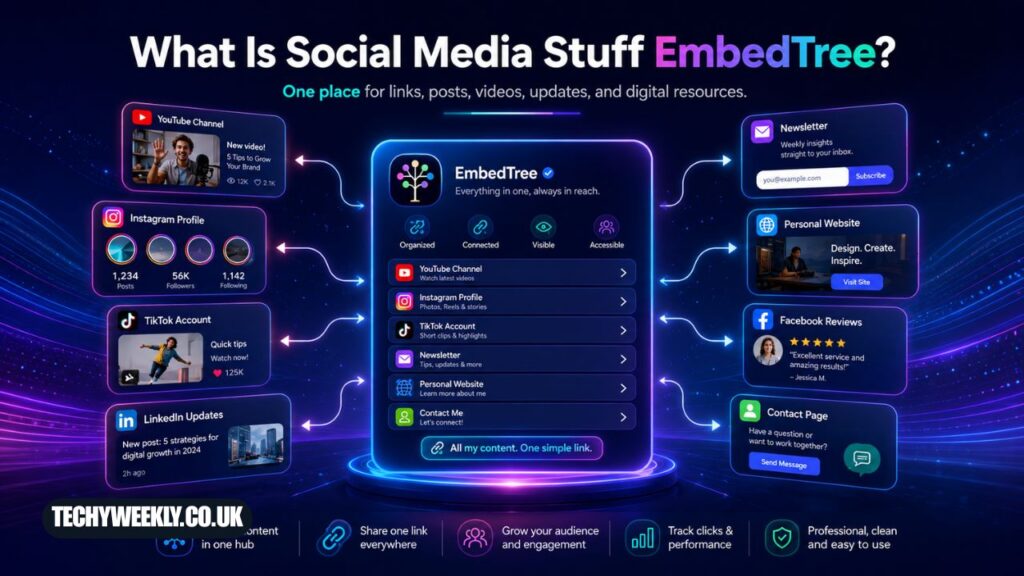
social media stuff embedtree refers to the idea of collecting and presenting social media content in a structured and easy-to-access format. It may include social links, embedded posts, videos, short updates, content previews, profile buttons, and digital resources. The goal is simple: make social media easier to explore from one place.
For example, a creator may have a YouTube channel, Instagram profile, TikTok account, newsletter, and personal website. A small business may have Facebook reviews, Instagram product posts, LinkedIn updates, and a contact page. Without proper organization, visitors may not know where to go first. A central content hub makes the journey smoother.
In simple words, social media stuff embedtree works like a digital display board. It allows visitors to see the most useful social media content without feeling lost. This makes it helpful for people who want to improve visibility, save time, and present their online identity in a more professional way.
Why Social Media Content Needs Better Organization
Social media moves fast. A post that performs well today may be pushed down tomorrow. A useful video may get lost under newer updates. A business announcement, product launch, customer review, or important link can disappear from public attention if it is not placed where people can easily find it.
That is why content organization matters. When social media content is scattered, the audience has to work harder. Most visitors do not want to search deeply. They want quick access, clear direction, and useful information. A well-organized social media hub can help solve this problem by bringing important content together.
social media stuff embedtree is useful because it supports this organized approach. It gives structure to social media activity and helps users connect different platforms in a clean way. For creators, it can support personal branding. For businesses, it can make products, services, reviews, and updates easier to find.
How Social Media Stuff EmbedTree Works
The basic idea is simple. You collect your important social media materials and place them in a central format. This can include profile links, social media feeds, latest posts, featured videos, service pages, blog links, contact buttons, and promotional content. Visitors can then move from one section to another without confusion.
A website owner may use this style to display Instagram posts on a homepage. A creator may use it to show YouTube videos, TikTok clips, and podcast links. A business may use it to highlight customer reviews, announcements, offers, and brand stories. The setup depends on the goal, but the purpose remains the same: better social media presentation.
social media stuff embedtree also supports a cleaner user experience. Instead of forcing people to jump from one platform to another blindly, it gives them a simple path. This can improve time on page, content discovery, and audience interaction.
Main Features of a Social Media Content Hub
A good social media content hub should be simple, organized, and useful. It should not feel crowded or confusing. The best layout usually includes only the most important content so visitors can understand the page quickly.
Common features may include social profile buttons, embedded feeds, video previews, clickable links, short descriptions, category sections, and contact options. Some hubs may also include analytics, allowing users to see which links or posts receive the most attention.
For businesses, customization is also important. Brand colors, logo placement, clean design, and mobile-friendly layout can make the page look more professional. Since many people browse from phones, a social media hub should load quickly and display correctly on small screens.
Benefits for Creators
Creators often work across many platforms. A YouTuber may also post short clips on TikTok, behind-the-scenes content on Instagram, and updates on X. A blogger may share articles, newsletters, product recommendations, and social posts. Keeping all of this organized helps followers find the right content faster.
social media stuff embedtree can help creators build a stronger digital identity. When everything is placed in one clear hub, followers can explore more content without leaving confused. It also makes promotion easier because the creator can share one central page instead of many separate links.
This is especially useful for influencers, artists, coaches, educators, podcasters, and freelancers. A clean content hub can show what they do, where they are active, and how people can connect with them.
Benefits for Businesses
For businesses, social media is not only about posting updates. It is also about building trust. When customers visit a brand online, they often check reviews, photos, videos, offers, and recent updates before making a decision. If these materials are scattered, the customer may leave before taking action.
social media stuff embedtree can make a business look more active and reliable. A restaurant can show food photos, customer reviews, location details, and booking links. A clothing store can display Instagram posts, product videos, sale updates, and customer styling content. A service provider can show testimonials, LinkedIn posts, case studies, and contact options.
This kind of organization helps customers understand the brand faster. It also supports better engagement because visitors can easily move from viewing content to taking action.
Best Ways to Use Social Media Stuff EmbedTree
The best use depends on the audience. A personal brand may use it as a profile hub. A business may use it as a website section. A blogger may use it to collect social posts and article links. A creator may use it as a link-in-bio style page.
The most important thing is to keep the layout focused. Too many links can make the page confusing. It is better to highlight the most useful content, such as latest posts, best videos, important services, contact details, and top-performing social platforms.
A strong setup should answer three questions for visitors: Who are you? What do you offer? Where should they go next? When the content answers these questions clearly, the page becomes more useful.
Social Media Stuff EmbedTree for Website Growth
Websites and social media work better when they support each other. A website gives more control, while social media brings attention and engagement. By connecting both, brands and creators can create a stronger online presence.
Embedding social media content on a website can make the site feel fresh and active. Visitors can see recent updates, real posts, customer reactions, and current activity. This can help build trust because the brand does not look inactive or outdated.
social media stuff embedtree can support website growth by making social content easier to display. Instead of leaving social media separate from the website, it creates a bridge between the two. This is useful for blogs, business websites, personal portfolios, online stores, and service pages.
Common Mistakes to Avoid
One common mistake is adding too much content. A social media hub should guide the visitor, not overwhelm them. If the page has too many buttons, feeds, banners, and videos, users may leave quickly.
Another mistake is using outdated links. If a social profile is no longer active, it should not be placed at the top. Important links should be checked often to make sure they still work.
Poor design is also a problem. A cluttered page, hard-to-read text, slow loading, or confusing layout can reduce trust. The content should look clean, simple, and professional.
Final Thoughts
social media stuff embedtree is a useful concept for anyone who wants to manage social media content in a better way. It helps organize links, posts, feeds, videos, updates, and online profiles so visitors can find important content without confusion.
For creators, it can improve personal branding and content discovery. For businesses, it can support trust, visibility, and customer engagement. For bloggers and website owners, it can connect social platforms with website content in a cleaner and more meaningful way.
The best approach is to keep it simple, useful, and focused. When social media content is easy to explore, visitors are more likely to stay, click, follow, and take action.
FAQs
What is social media stuff embedtree?
social media stuff embedtree means organizing social media links, posts, feeds, and content in one easy place. It helps visitors explore online content without confusion.
Who can use social media stuff embedtree?
Creators, bloggers, small businesses, freelancers, influencers, and brands can use it. It is useful for anyone active on multiple social media platforms.
Why is a social media content hub important?
A content hub keeps important links, posts, videos, and updates organized. It makes the user experience smoother and helps people find content faster.
Can businesses benefit from it?
Yes, businesses can use it to show reviews, product posts, offers, videos, and contact links. It helps customers understand the brand more easily.
Is social media stuff embedtree useful for websites?
Yes, it can help connect social media activity with website visitors. It can make a website look more active, useful, and connected.